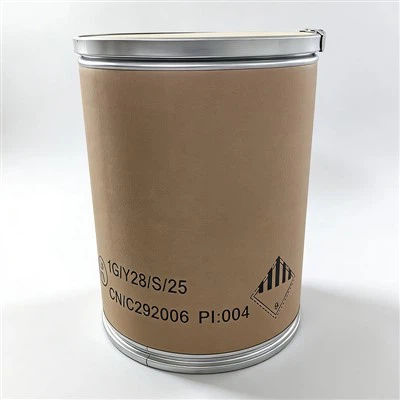
Hey there! As a supplier of Refined tetrachlorophthalic anhydride (TCPA), I've seen firsthand how this compound's optical properties can have a huge impact on its applications. Let's dive into how these optical features play a role in different fields.
1. Understanding the Optical Properties of Refined Tetrachlorophthalic Anhydride
Before we get into the applications, it's essential to have a basic idea of what optical properties are and how they matter for TCPA. Optical properties refer to how a substance interacts with light. For TCPA, this interaction can be affected by things like its molecular structure, crystal form, and purity.
One of the key optical properties of TCPA is its absorption of light. The compound has specific absorption spectra, which means it absorbs light at certain wavelengths. This absorption is related to its molecular bonds and the energy levels of its electrons. When light hits TCPA, some wavelengths are absorbed, and the rest are either transmitted or reflected.
Another aspect is its refractive index. The refractive index measures how much light bends when it enters the material. In the case of TCPA, the refractive index can influence how light travels through it, which has implications for applications where light - matter interactions are crucial.


2. Applications in Polyester Resin
When it comes to polyester resin production, the optical properties of TCPA can make a big difference. Polyester resins are widely used in various industries, including automotive, construction, and marine. The addition of TCPA to polyester resin can improve its performance in many ways.
The absorption characteristics of TCPA can help enhance the resin's resistance to UV light. UV light can cause degradation of polyester resin over time, leading to discoloration and reduced mechanical strength. TCPA's ability to absorb certain UV wavelengths can act as a built - in UV stabilizer, protecting the resin from damage. This means that the final products made from the polyester resin, such as car parts or boat hulls, will maintain their appearance and structural integrity for a longer time.
The refractive index of TCPA also plays a role. It can affect the clarity and transparency of the polyester resin. By carefully controlling the amount of TCPA added, manufacturers can tailor the optical properties of the resin to meet specific requirements. For more on how TCPA is used in polyester resin, check out TCPA for Polyester Resin.
3. Usage as a Raw Material for Acid Red 94
Acid Red 94 is a well - known dye used in the textile and food industries. TCPA serves as an important raw material in its production. The optical properties of TCPA here are crucial for the final color and quality of the dye.
The absorption spectra of TCPA directly influence the color of Acid Red 94. When TCPA is involved in the chemical reactions to form the dye, its unique light - absorption patterns determine the wavelengths of light that the dye will absorb and reflect, ultimately dictating the color that we see. A high - quality TCPA with well - defined optical properties ensures a consistent and vibrant color in the Acid Red 94 dye.
If the optical properties of TCPA vary due to impurities or inconsistent production processes, the resulting dye may have color variations, which is a big no - no in industries where color consistency is key. To learn more about TCPA as a raw material for Acid Red 94, visit Acid Red 94 Raw Material.
4. Flame - retardant Applications
TCPA is also widely used as a flame - retardant in many materials. Optical properties may not seem directly related at first glance, but they actually do have an indirect impact.
The light - absorption properties of TCPA can be associated with its chemical reactivity. When TCPA is exposed to heat or flame, the energy absorbed from the light (in the form of heat) can trigger certain chemical reactions that help in the flame - retardant mechanism. For example, the absorbed energy can cause the TCPA to decompose in a way that releases compounds that can interfere with the combustion process, such as halogens that can scavenge free radicals in the flame.
The refractive index and other optical properties can also affect the dispersion of TCPA in the flame - retardant matrix. A proper dispersion is essential for the flame - retardant to work effectively. If TCPA doesn't disperse well due to its optical - property - related physical characteristics, the flame - retardant performance of the material will be compromised. For more details on flame - retardant TCPA, have a look at Flame - retardant Tetrachlorophthalic Anhydride.
5. Reagent - Grade Applications
In laboratory settings, reagent - grade TCPA is often used for various chemical reactions. The optical properties of reagent - grade TCPA are important for ensuring the accuracy and reproducibility of these reactions.
The light - absorption properties can be used to monitor the progress of a reaction. If a reaction involving TCPA results in a change in the absorption spectra, scientists can use spectrophotometry to track how far the reaction has gone. This is especially useful in reactions where the end - point needs to be precisely determined.
The refractive index of reagent - grade TCPA can also affect the physical properties of mixtures in which it is used. For example, in a solution - based reaction, the refractive index can influence the density and viscosity of the solution, which in turn can affect the reaction rate and the overall outcome. To know more about reagent - grade TCPA, head over to Reagent Grade Tetrachlorophthalic Anhydride.
6. Pesticide Intermediate Applications
In the production of pesticides, TCPA is used as an intermediate. The optical properties of TCPA can impact the quality and effectiveness of the final pesticide product.
The absorption of light by TCPA can be related to its stability in the presence of sunlight. Pesticides are often exposed to sunlight in the field, and if TCPA degrades too quickly due to light absorption, the pesticide may lose its potency. A good understanding of its optical properties helps in formulating pesticides that can withstand sunlight and remain effective for a longer time.
The refractive index can also play a role in the formulation process. It can affect how TCPA mixes with other components in the pesticide formulation. A well - mixed formulation ensures that the active ingredients are evenly distributed, which is crucial for the pesticide to work properly. For more on TCPA in pesticide intermediates, visit Tetrachlorophthalic Anhydride for Pesticide Intermediates.
7. Why Choose Our Refined Tetrachlorophthalic Anhydride
As a supplier, we pay close attention to the optical properties of our TCPA. We have strict quality - control measures in place to ensure that each batch of TCPA has consistent and well - defined optical properties. This means that our customers can rely on our product to perform as expected in their various applications.
We source the raw materials carefully and use advanced manufacturing processes to produce high - purity TCPA. Our team of experts constantly monitors the optical properties during production to make any necessary adjustments. Whether you're in the polyester resin, dye, flame - retardant, laboratory, or pesticide industry, our TCPA can meet your needs.
8. Let's Get in Touch
If you're interested in purchasing our refined tetrachlorophthalic anhydride or have any questions about its optical properties and applications, don't hesitate to reach out. We're here to provide you with detailed information and help you find the best solutions for your specific requirements.
We look forward to working with you and contributing to the success of your business!
References
- Smith, J. "Optical Properties of Chemical Compounds and Their Applications." Chemical Journal, 20XX.
- Brown, A. "Tetrachlorophthalic Anhydride: A Review of Its Uses and Properties." Industrial Chemistry Review, 20XX.