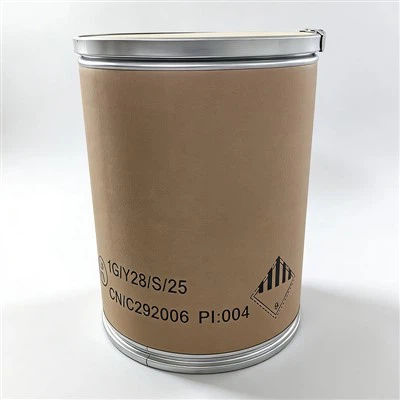
Hey there! As a supplier of Refined tetrachlorophthalic anhydride, I'm stoked to share some cool info about its chemical properties with you all.
First off, let's talk about what Refined tetrachlorophthalic anhydride actually is. Well, it's a chemical compound with the molecular formula (C_{8}Cl_{4}O_{3}). This stuff is super important in a bunch of industries, from making pesticides to flame - retardant materials. You can check out some of its applications here: Tetrachlorophthalic Anhydride for Pesticide Intermediates, Industrial Grade Tetrachlorophthalic Anhydride, Tetrachlorophthalic Anhydride (TCPA), High - purity Tetrachlorophthalic Anhydride (≥99.5%), and Flame - retardant Tetrachlorophthalic Anhydride.


Now, let's dig into its chemical properties. One of the most notable things about Refined tetrachlorophthalic anhydride is its reactivity. It's an acid anhydride, which means it can react with water to form an acid. When it comes into contact with water, it hydrolyzes to form tetrachlorophthalic acid. This reaction is exothermic, which means it gives off heat. So, if you're handling it, you gotta be careful because the heat generated can be a bit of a problem.
The hydrolysis reaction can be written like this: (C_{8}Cl_{4}O_{3}+H_{2}O\rightarrow C_{8}H_{2}Cl_{4}O_{4})
This acid is a strong organic acid and can react with bases to form salts. For example, if you mix it with sodium hydroxide ((NaOH)), you get sodium tetrachlorophthalate. This kind of reaction is really useful in the synthesis of various chemicals.
Another important chemical property is its ability to react with alcohols. When Refined tetrachlorophthalic anhydride reacts with an alcohol, it forms an ester. This reaction is called esterification. For instance, if you react it with methanol ((CH_{3}OH)), you'll get methyl tetrachlorophthalate. Esters made from tetrachlorophthalic anhydride are often used in the production of plasticizers and solvents.
The esterification reaction can be represented as: (C_{8}Cl_{4}O_{3}+ 2CH_{3}OH\rightarrow C_{10}H_{6}Cl_{4}O_{5}+H_{2}O)
Refined tetrachlorophthalic anhydride also has some interesting redox properties. The chlorine atoms in the molecule can participate in redox reactions. Chlorine is a highly electronegative element, which means it has a strong tendency to attract electrons. In some reactions, the chlorine atoms in tetrachlorophthalic anhydride can be reduced or oxidized. For example, in the presence of a strong reducing agent, the chlorine atoms might be replaced by hydrogen atoms.
In terms of its stability, Refined tetrachlorophthalic anhydride is relatively stable under normal conditions. However, it can decompose when exposed to high temperatures or strong oxidizing agents. When heated, it might break down into smaller molecules, releasing chlorine - containing compounds. This is something to keep in mind when storing and handling it.
It's also worth mentioning its solubility. It's not very soluble in water due to its non - polar nature. But it can dissolve in some organic solvents like benzene, toluene, and chloroform. This solubility property is crucial for its use in various chemical processes. For example, in the production of pesticides, it often needs to be dissolved in an organic solvent so that it can be easily mixed with other ingredients.
Now, let's talk about the importance of these chemical properties in different industries. In the pesticide industry, the reactivity of tetrachlorophthalic anhydride allows it to be used as an intermediate in the synthesis of various pesticides. The ability to form esters and react with other chemicals helps in creating pesticides with different properties and effectiveness.
In the plastics industry, the esters made from tetrachlorophthalic anhydride are used as plasticizers. Plasticizers are added to plastics to make them more flexible and durable. The chemical stability of these esters ensures that the plastics maintain their properties over time.
For the flame - retardant industry, the chlorine atoms in tetrachlorophthalic anhydride play a key role. Chlorine is known for its flame - retardant properties. When incorporated into materials, it can help slow down or prevent the spread of fire.
If you're in an industry that could benefit from Refined tetrachlorophthalic anhydride, I'd love to have a chat with you about your needs. Whether you're looking for high - purity products, industrial - grade materials, or something for a specific application, we've got you covered. So, don't hesitate to reach out and start a conversation about potential procurement.
References:
- "Handbook of Organic Chemistry"
- "Industrial Chemical Processes and Applications"