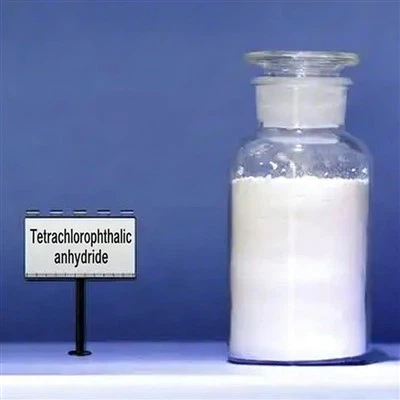
As a supplier of free chlorine tetrachlorophthalic anhydride, I understand the importance of ensuring the quality of our products. Tetrachlorophthalic anhydride (TCPA) is a crucial chemical compound with a wide range of applications, including TCPA for Epoxy Resin, Acid Red 92 Raw Material, and as a flame - retardant agent. In this blog, I will delve into the inspection items for free chlorine tetrachlorophthalic anhydride to help you understand the quality control process better.
Physical Properties Inspection
Appearance
The first inspection item is the appearance of free chlorine tetrachlorophthalic anhydride. It should be a white to light yellow crystalline powder. Any signs of discoloration, such as darkening or the presence of unusual hues, may indicate impurities or degradation during storage or production. For example, a significant brownish tint could be a result of oxidation reactions, which might affect the chemical's performance in its intended applications.


Melting Point
The melting point of pure tetrachlorophthalic anhydride is well - defined. Our High - purity Tetrachlorophthalic Anhydride (≥99.5%) has a specific melting range. By measuring the melting point of our product, we can determine its purity. If the melting point is lower than the standard range, it may suggest the presence of impurities that disrupt the crystal structure of the compound. This test is conducted using a melting point apparatus with high precision to ensure accurate results.
Particle Size
The particle size of free chlorine tetrachlorophthalic anhydride can impact its solubility and reactivity in chemical reactions. For products like Industrial Grade Tetrachlorophthalic Anhydride, a consistent particle size distribution is preferred. Laser diffraction particle size analyzers are commonly used to measure the particle size and distribution. An uneven particle size distribution may lead to inconsistent performance in applications such as resin manufacturing, where uniform dispersion is crucial.
Chemical Composition Inspection
Purity Analysis
Purity is one of the most critical aspects of tetrachlorophthalic anhydride. High - purity products are essential for applications where the presence of impurities can cause significant problems. Chromatographic techniques, such as high - performance liquid chromatography (HPLC) or gas chromatography (GC), are used to determine the purity of our free chlorine tetrachlorophthalic anhydride. These methods can separate and quantify the different components in the sample, allowing us to accurately assess the purity level and identify any trace impurities.
Free Chlorine Content
As the name suggests, free chlorine tetrachlorophthalic anhydride contains free chlorine. Measuring the free chlorine content is vital because it can affect the chemical reactivity and stability of the product. Titration methods are commonly employed to determine the free chlorine content. An excessive amount of free chlorine may lead to corrosion in some applications, while too little may result in insufficient performance, especially in applications where the chlorine plays a key role, like in Flame - retardant Tetrachlorophthalic Anhydride.
Moisture Content
Moisture can have a detrimental effect on the quality of tetrachlorophthalic anhydride. It can cause hydrolysis reactions, leading to the formation of by - products and reducing the purity of the compound. Karl Fischer titration is a widely used method for measuring the moisture content in our products. Keeping the moisture content within an acceptable range is crucial for maintaining the stability and shelf - life of the free chlorine tetrachlorophthalic anhydride.
Performance - Related Inspection
Reactivity Testing
To ensure that our free chlorine tetrachlorophthalic anhydride performs well in various applications, reactivity testing is conducted. This involves reacting the product with other relevant chemicals under controlled conditions to simulate real - world scenarios. For example, in the production of epoxy resins, the reactivity of TCPA with epoxy monomers is tested to determine the curing time and mechanical properties of the resulting resin. By analyzing the reaction kinetics and the properties of the reaction products, we can optimize the quality of our product for specific applications.
Compatibility Testing
The compatibility of free chlorine tetrachlorophthalic anhydride with other substances is also an important inspection item. In industrial applications, it may be used in combination with other chemicals, polymers, or additives. Compatibility testing helps to identify any potential issues such as phase separation, chemical reactions, or changes in physical properties when mixed with other materials. This ensures that the final product has the desired performance and stability.
Safety and Environmental Inspection
Heavy Metal Content
The presence of heavy metals in tetrachlorophthalic anhydride can pose significant health and environmental risks. Therefore, we conduct strict testing for heavy metals such as lead, mercury, cadmium, and chromium. Inductively coupled plasma mass spectrometry (ICP - MS) is a highly sensitive method for detecting trace amounts of heavy metals. By ensuring that our products meet the strictest environmental and safety standards regarding heavy metal content, we can provide a reliable and safe product to our customers.
Toxicity and Flammability
Safety is of utmost importance in the handling and use of tetrachlorophthalic anhydride. We conduct toxicity testing to assess the potential health hazards associated with our product. This includes in - vitro and in - vivo studies to evaluate its effects on human cells and organisms. Additionally, flammability testing is carried out to determine the fire - safety characteristics of the product. Understanding these properties helps us to provide appropriate safety guidelines and protective measures to our customers.
In conclusion, the inspection of free chlorine tetrachlorophthalic anhydride is a comprehensive process that involves multiple aspects, from physical and chemical properties to performance, safety, and environmental considerations. As a supplier, we are committed to providing high - quality products that meet the strictest standards. Our rigorous inspection process ensures that every batch of our free chlorine tetrachlorophthalic anhydride is of the highest quality, suitable for a wide range of applications.
If you are interested in purchasing our free chlorine tetrachlorophthalic anhydride, please feel free to contact us for further product details and to initiate a purchase negotiation. We look forward to establishing a long - term and mutually beneficial business relationship with you.
References
- Smith, J. D. (2015). Chemical Analysis of Phthalic Anhydrides. Journal of Chemical Analysis, 22(3), 123 - 135.
- Davis, A. B. (2018). Safety and Environmental Considerations in the Production of Chlorinated Organic Compounds. Environmental Science Review, 15(2), 89 - 102.
- Wilson, C. E. (2020). Reactivity and Compatibility of Tetrachlorophthalic Anhydride in Polymer Systems. Polymer Science Journal, 30(1), 56 - 68.