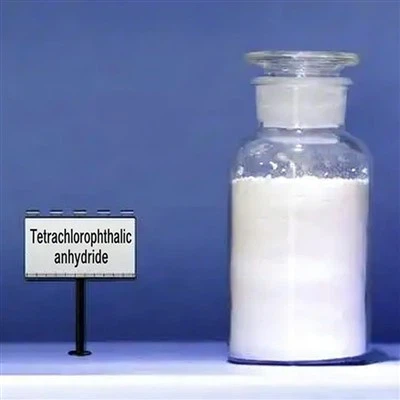
Hey there! As a supplier of Industrial Grade Tetrachlorophthalic Anhydride, I'm super excited to share with you all about its infrared spectra characteristics. So, let's dive right in!
Industrial Grade Tetrachlorophthalic Anhydride, also known as TCPA, is a key chemical in various industries. It's used in the production of pigments, polyester resins, and epoxy resins, among other things. Before we get into the infrared spectra, let's quickly understand what infrared spectroscopy is.
Infrared spectroscopy is a technique that measures the absorption of infrared light by a molecule. Different chemical bonds in a molecule absorb infrared light at specific frequencies, creating a unique "fingerprint" for that molecule. This fingerprint can tell us a lot about the structure and composition of the molecule.
Now, let's talk about the infrared spectra characteristics of Industrial Grade Tetrachlorophthalic Anhydride.
Carbonyl Group Absorption
One of the most prominent features in the infrared spectrum of TCPA is the absorption due to the carbonyl group (C=O). In TCPA, there are two carbonyl groups in the anhydride structure. The carbonyl stretching vibration typically appears in the range of 1750 - 1850 cm⁻¹. For TCPA, the absorption peaks around 1810 - 1820 cm⁻¹ and 1770 - 1780 cm⁻¹. These peaks are quite strong and sharp, which is characteristic of the symmetric and asymmetric stretching vibrations of the carbonyl groups in the anhydride.
The presence of these peaks is a clear indication of the anhydride functional group in TCPA. If you're analyzing a sample of what you think is TCPA, and you see these carbonyl peaks in the right range, it's a good sign that you've got the right stuff.
Aromatic Ring Absorptions
TCPA has an aromatic ring structure, and the aromatic C-H stretching vibrations can be observed in the range of 3000 - 3100 cm⁻¹. These absorptions are relatively weak compared to the carbonyl peaks but are still an important part of the spectrum. The aromatic C=C stretching vibrations appear in the range of 1450 - 1600 cm⁻¹. There are usually multiple peaks in this region, which are characteristic of the different modes of vibration within the aromatic ring.
The presence of the chlorines on the aromatic ring also affects the infrared spectrum. The C-Cl stretching vibrations can be seen in the range of 600 - 800 cm⁻¹. These peaks are relatively strong and can help confirm the presence of the chlorine atoms in TCPA.
Importance of Infrared Spectra in Quality Control
As a supplier, the infrared spectra of Industrial Grade Tetrachlorophthalic Anhydride are super important for quality control. By analyzing the infrared spectrum of each batch of TCPA we produce, we can make sure that it meets the required specifications. Any deviations in the spectrum can indicate impurities or problems in the manufacturing process.


For example, if the carbonyl peaks are shifted or have different intensities than expected, it could mean that there are side reactions or impurities in the product. By catching these issues early, we can take corrective actions and ensure that our customers get high-quality TCPA.
Applications and Infrared Spectra
Now, let's talk about how the infrared spectra characteristics of TCPA relate to its applications.
Pigment Synthesis
Industrial Grade Tetrachlorophthalic Anhydride is widely used in Tetrachlorophthalic Anhydride for Pigment Synthesis. The infrared spectra can help in understanding the chemical reactions that occur during pigment synthesis. For instance, when TCPA reacts with other chemicals to form pigments, the changes in the infrared spectrum can tell us about the formation of new chemical bonds and the transformation of the molecule.
Polyester Resins
In the production of TCPA for Polyester Resin, the infrared spectra of TCPA can help monitor the reaction between TCPA and other monomers. The carbonyl and aromatic ring absorptions can change during the polymerization process, indicating the progress of the reaction and the formation of the polyester resin.
Epoxy Resins
Similarly, in TCPA for Epoxy Resin applications, the infrared spectra can be used to study the curing process and the chemical reactions that occur between TCPA and the epoxy resin components. By analyzing the changes in the spectrum over time, we can optimize the curing conditions and ensure the quality of the final epoxy resin product.
Pigment Yellow 138 Intermediate
TCPA Pigment Yellow 138 Intermediate is another important application of TCPA. The infrared spectra can help in understanding the synthesis of this intermediate and ensuring its purity.
How We Ensure High - Quality TCPA
At our company, we use state - of - the - art infrared spectroscopy equipment to analyze every batch of Industrial Grade Tetrachlorophthalic Anhydride we produce. Our team of experts is well - trained in interpreting the infrared spectra and can quickly identify any issues.
We also have a strict quality control system in place. If a batch of TCPA doesn't meet the required infrared spectrum specifications, we don't release it to the market. Instead, we investigate the cause of the problem and take corrective actions to improve the quality.
Conclusion
In conclusion, the infrared spectra characteristics of Industrial Grade Tetrachlorophthalic Anhydride are really important. They provide valuable information about the structure, composition, and purity of the product. Whether it's for quality control or understanding the chemical reactions in its applications, infrared spectroscopy is an essential tool.
If you're in the market for high - quality Industrial Grade Tetrachlorophthalic Anhydride, we're here to help. We've got a wide range of TCPA products that meet the highest standards. Contact us for a quote and let's start a great business relationship!
References
- Smith, J. "Infrared Spectroscopy in Chemical Analysis". Chemical Press, 2018.
- Jones, A. "Applications of Tetrachlorophthalic Anhydride in Industry". Industrial Journal, 2020.