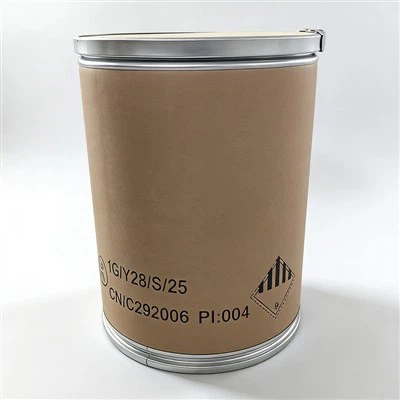
As a leading supplier of Reagent Grade Tetrachlorophthalic Anhydride, frequently encounter inquiries about the analytical methods for detecting this crucial chemical compound. In this blog post, I'll delve into various techniques used to detect and analyze Reagent Grade Tetrachlorophthalic Anhydride, providing valuable insights for researchers, producers, and customers alike.
Introduction to Reagent Grade Tetrachlorophthalic Anhydride
Reagent Grade Tetrachlorophthalic Anhydride, with the Tetrachlorophthalic Anhydride CAS 117-08-8, is a white to off - white crystalline powder. It has wide applications in industries such as pesticide Tetrachlorophthalic Anhydride for Pesticide Intermediates, dye manufacturing (used as Acid Red 92 Raw Material and Solvent Red 135 Raw Material), and pigment production (TCPA Pigment Yellow 138 Intermediate). Ensuring its quality and purity through reliable analytical methods is of utmost importance.
Chromatographic Methods
High - Performance Liquid Chromatography (HPLC)
HPLC is a widely used technique for the analysis of Reagent Grade Tetrachlorophthalic Anhydride. This method separates the components of a sample based on their differential interactions with a stationary phase and a mobile phase. For Tetrachlorophthalic Anhydride, a reversed - phase HPLC system with a C18 column is often employed. The mobile phase is typically a mixture of water and an organic solvent such as acetonitrile.


The sample is injected into the HPLC system, and as it passes through the column, different compounds are retained for different times. Tetrachlorophthalic Anhydride is detected by a suitable detector, such as a UV - Vis detector. The detector measures the absorbance of the eluted compound at a specific wavelength, usually around 254 nm, where Tetrachlorophthalic Anhydride has a characteristic absorption peak.
The advantage of HPLC is its high sensitivity and selectivity. It can accurately quantify the amount of Tetrachlorophthalic Anhydride in a sample, even in the presence of impurities. Additionally, it can be used to identify and quantify other related compounds or impurities that may be present in the sample.
Gas Chromatography (GC)
Gas chromatography is another powerful analytical tool for detecting Tetrachlorophthalic Anhydride. In GC, the sample is vaporized and carried by an inert gas (such as helium) through a column packed with a stationary phase.
Tetrachlorophthalic Anhydride has a relatively high boiling point, so it may require derivatization before analysis to improve its volatility. After derivatization, the sample is injected into the GC system. As the compounds pass through the column, they are separated based on their different affinities for the stationary phase.
A flame ionization detector (FID) or an electron capture detector (ECD) is commonly used in GC analysis of Tetrachlorophthalic Anhydride. FID is a general - purpose detector that responds to most organic compounds, while ECD is highly sensitive to compounds containing electronegative elements such as chlorine, which makes it particularly suitable for detecting Tetrachlorophthalic Anhydride.
Spectroscopic Methods
Fourier - Transform Infrared Spectroscopy (FTIR)
FTIR is a non - destructive analytical technique that can be used to identify the functional groups present in Tetrachlorophthalic Anhydride. When infrared radiation passes through a sample, certain wavelengths are absorbed by the chemical bonds in the molecule.
In the case of Tetrachlorophthalic Anhydride, characteristic absorption bands can be observed for the carbonyl group (C = O) in the anhydride structure, as well as for the C - Cl bonds. By comparing the FTIR spectrum of the sample with a reference spectrum of pure Tetrachlorophthalic Anhydride, the identity of the compound can be confirmed, and the presence of any impurities can be detected.
The advantage of FTIR is its simplicity and the ability to provide qualitative information quickly. It can be used for in - house quality control tests to check the general purity of the product.
Nuclear Magnetic Resonance (NMR) Spectroscopy
NMR spectroscopy is a powerful technique for determining the molecular structure of compounds. For Reagent Grade Tetrachlorophthalic Anhydride, ¹H NMR and ¹³C NMR can be used.
¹H NMR provides information about the hydrogen atoms in the molecule, such as their chemical environment and connectivity. In the case of Tetrachlorophthalic Anhydride, the signals from the aromatic hydrogen atoms can be used to confirm the structure. ¹³C NMR, on the other hand, gives information about the carbon atoms in the molecule.
NMR is a highly accurate and definitive method for structure determination. It can also be used to identify any impurities in the sample by detecting the additional signals corresponding to foreign compounds. However, NMR requires more complex sample preparation and expensive equipment, making it less suitable for routine, large - scale analysis.
Titrimetric Methods
Acid - Base Titration
Tetrachlorophthalic Anhydride can react with water to form the corresponding acid. Acid - base titration can be used to determine the purity of Tetrachlorophthalic Anhydride by measuring the amount of acid produced upon hydrolysis.
A sample of Tetrachlorophthalic Anhydride is first hydrolyzed in water, and then the resulting acid is titrated with a standard solution of a strong base, such as sodium hydroxide. The endpoint of the titration can be determined using an indicator, such as phenolphthalein.
The advantage of acid - base titration is its simplicity and low cost. It can provide a quick and rough estimate of the purity of the sample. However, it may not be as accurate as chromatographic or spectroscopic methods, especially when there are other acidic or basic impurities present in the sample.
Quality Control and Significance of Analytical Methods
As a supplier of Reagent Grade Tetrachlorophthalic Anhydride, strict quality control is essential. The use of multiple analytical methods is crucial to ensure the high quality and purity of our products. Different methods complement each other and provide comprehensive information about the sample.
For instance, chromatographic methods are excellent for quantifying the amount of Tetrachlorophthalic Anhydride and detecting impurities, while spectroscopic methods can confirm the identity and structure of the compound. Titrimetric methods can be used for routine in - house checks to ensure basic quality standards.
Contact Us for Purchasing
If you are in the market for high - quality Reagent Grade Tetrachlorophthalic Anhydride, we are here to meet your needs. Our products are manufactured under strict quality control, and we use the analytical methods described above to ensure the purity and quality of our products. Contact us to discuss your specific requirements and start a successful procurement process.
References
- Skoog, D. A., West, D. M., Holler, F. J., & Crouch, S. R. (2013). Fundamentals of Analytical Chemistry. Cengage Learning.
- Harris, D. C. (2016). Quantitative Chemical Analysis. W. H. Freeman.
- Miller, J. N., & Miller, J. C. (2010). Statistics and Chemometrics for Analytical Chemistry. Pearson Education.